Hongtae Lee 1 , Ki Hwa Lee 2
Authors affiliation:
1 Hongtae Lee, Myeong Ji Proctology Surgery Clinic, Busan, Republic of Korea; Email: hongtaelee@gmail.com
Patients with muscular dystrophy face significant anesthetic challenges due to the increased risks of respiratory compromise, cardiac involvement, rhabdomyolysis, and adverse reactions to anesthetic agents. Careful planning of anesthetic techniques is particularly important in ambulatory surgery settings where rapid postoperative recovery and discharge are required. We report a case of a 31-year-old woman with muscular dystrophy who presented with symptomatic third-degree hemorrhoids. The patient had a history of extensive spinal fusion for thoracolumbar scoliosis, which made regional anesthesia technically difficult and potentially unsafe. Additionally, general anesthesia was considered a high-risk procedure because of the underlying neuromuscular disease. After preoperative evaluation, hemorrhoidectomy was successfully performed under local anesthesia. The patient was discharged without complications on the day of surgery. This case report highlights the importance of individualized anesthetic strategies in patients with muscular dystrophy undergoing anorectal surgery at a day-surgery clinic. When conventional anesthetic options are limited, local anesthesia is a safe and effective alternative. In day-case surgery, individualized anesthetic planning based on patient-specific factors, along with a meticulous and limited hemorrhoidectomy, is essential rather than rigid adherence to a single anesthetic technique.
Keywords: Ambulatory surgical procedure; Hemorrhoidectomy; Local anesthesia; Muscular dystrophy
Citation: Lee H, Lee KH. Individualized anesthetic strategy for day-case hemorrhoidectomy in a patient with muscular dystrophy: a case report. Anaesth. pain intensive care 2026;30(6):769-772. DOI: 10.35975/apic.v30i6.3273
Received: March 05, 2026; Revised: April 07, 2026; Accepted: April 26, 2026
Muscular dystrophy (MD) is a heterogeneous group of inherited myogenic disorders characterized by progressive skeletal muscle weakness and wasting.1 More than 30 subtypes have been described, including Duchenne, Becker, Emery–Dreifuss, limb-girdle, facioscapulohumeral, and oculopharyngeal muscular dystrophy, each with distinct clinical features and perioperative considerations.1,2 The underlying pathophysiology commonly involves cytoskeletal disruption, sarcolemma instability, and impaired intracellular calcium homeostasis, which predispose patients to significant anesthetic risk.1
Hemorrhoids are common in patients with muscular dystrophy. Chronic constipation and neuromuscular involvement of the anal sphincter has been reported in these patients.3,4 Therefore, hemorrhoid surgical treatment requires careful consideration of both the underlying neuromuscular disease and the anesthetic plan.
Anesthesia management in patients with muscular dystrophy is a complex challenge that requires careful preoperative evaluation, tailored treatment strategies, and vigilant perioperative monitoring. Patients with muscular dystrophy are particularly vulnerable to perioperative respiratory insufficiency, cardiomyopathy, rhabdomyolysis, and life-threatening reactions to anesthetic agents.5 Volatile anesthetics and depolarizing neuromuscular blocking agents have been associated with acute rhabdomyolysis and hyperkalemic cardiac arrest, whereas residual muscle weakness may prolong the recovery of postoperative pulmonary function.1 Additionally, many patients develop scoliosis and spinal deformities requiring corrective surgery.6 This can complicate airway management and render neuraxial anesthesia technically difficult or unsafe due to adhesions at the operation site.
In ambulatory surgery settings, the choice of anesthetic technique plays a pivotal role in determining postoperative recovery and early discharge. Although spinal and caudal anesthesia are commonly used for hemorrhoidectomies, each of these techniques may carry substantial risks or technical limitations in patients with muscular dystrophy and prior spinal surgery. Therefore, an individual anesthetic strategy is essential.
We report a case of successful day-case hemorrhoidectomy performed under local anesthesia in a patient with muscular dystrophy and third-degree hemorrhoids. This case highlights the importance of tailored anesthetic decision making when conventional anesthetic options are limited.
A 31-year-old woman (height: 153 cm; weight: 35 kg) visited our day surgery clinic with symptomatic hemorrhoidal disease. The patient was diagnosed with muscular dystrophy in childhood and was wheelchair-dependent. She had not received any specific medical therapy for muscular dystrophy and had a history of extensive spinal fusion surgery for thoracolumbar scoliosis. No neurological symptoms associated with muscular dystrophy were observed.
The patient had a protruding mass in the anus for three years. Physical examination and anoscopic evaluation revealed third-degree hemorrhoids. Preoperative laboratory investigations, electrocardiography, and chest radiography were unremarkable, except for chest radiography, which demonstrated thoracic deformity and spinal instrumentation (Figure 1).
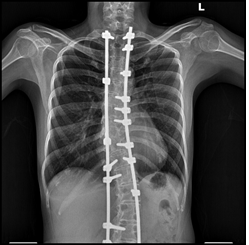
Figure 1: Chest x-ray showing spinal fixation
Anesthetic modalities applicable in day-surgery clinics, including caudal, spinal, and local anesthesia, were systematically evaluated. Based on the patient’s overall clinical status, local anesthesia was determined to be the most suitable option. The patient was placed in the prone jackknife position, and local infiltration anesthesia was administered using 2% lidocaine at the operative site. Adequate analgesia was achieved and digital anal dilation was performed. Hemorrhoidectomy was carried out using a harmonic
scalpel for the prolapsing hemorrhoids at the 5-, 8-, and 11-o’clock positions. The pedicles were sutured, hemostasis was confirmed, and a gauze pack was inserted into the anal canal. The operation was completed uneventfully without the need for additional anesthetic intervention.
Postoperatively, the patient was transferred to the general ward and vital signs were stable. No discomfort or severe post-operative pain was observed. The patient was discharged on the same day without any complications.
Surgical management of hemorrhoidal disease in patients with muscular dystrophy is challenging. These patients are at increased risk of perioperative complications, including respiratory failure, cardiac arrhythmias, hyperkalemia, malignant hyperthermia, and rhabdomyolysis.1,2,5 Such risks are influenced by the underlying neuromuscular pathology, in addition to interactions with anesthetic agents.1,5 Extensive preoperative evaluations, including medical history, airway and cardiac risk, respiratory reserve, and frequent pulmonary infections should be performed.
Each patient should be assessed for the individual risks associated with surgery and anesthesia. First, general anesthesia in patients with muscular dystrophy requires caution. Volatile anesthetic agents and depolarizing neuromuscular blockers are associated with an increased risk of rhabdomyolysis and hyperkalemic cardiac arrest, and residual muscle weakness may lead to prolonged postoperative ventilation and delayed recovery.1 The use of alternative methods of anesthesia, such as regional techniques or total intravenous anesthesia may offer benefits in patients with specific neuromuscular dysfunctions.
Second, the use of spinal anesthesia is warranted whenever possible. Spinal anesthesia has the advantages of reduced drug dosage, avoidance of tracheal intubation, and use of various anesthetic drugs. Neuromuscular diseases are a group of heterogeneous diseases whose common and major characteristic is decreased muscle strength. In this case, the patient was wheelchair-dependent with marked lower-extremity muscle atrophy. Therefore, recovery from spinal anesthesia could have been prolonged. Furthermore, spinal anesthesia is associated with an increased risk of postoperative urinary retention.7
Third, caudal anesthesia is considered advantageous in a day-surgery setting, because it is associated with a lower risk of urinary retention and post-dural puncture headache than spinal anesthesia.8 Although caudal anesthesia is technically demanding in adult patients, the use of ultrasound guidance enhances procedural accuracy and safety.9 Our institution previously reported the successful application of caudal anesthesia using ultrasound in a patient with syringomyelia, a rare neurological condition.10 However, in patients with extensive spinal deformities or prior spinal fusion, neuraxial anesthesia may be technically difficult, unreliable, or associated with increased procedural risk. Extensive spinal instrumentation and postoperative scarring in the thoracolumbar region have raised concerns regarding needle placement for caudal anesthesia. Repeated needle attempts may increase the risk of systemic toxicity from local anesthetics. Additionally, clinical consequences could be more pronounced in patients with a low body weight – in this case 35 kg – if such toxicity develops.
Considering these factors collectively, an individualized anesthetic strategy is critically important for patients with muscular dystrophy who represent a high-risk anesthetic population. In this case, we administered local anesthesia with lidocaine. Local anesthesia is well tolerated and as effective as spinal anesthesia for open hemorrhoidectomy in selected patients in an outpatient setting.11
In conclusion, the management of anesthesia in high-risk patients with muscular dystrophy requires an individualized approach that considers the specific features of each disease. Monitoring the effects of the drugs used and awareness of potential postoperative complications are key to providing safe and effective anesthetic care for these patients. In day-case surgery, an individualized anesthetic strategy based on patient-specific factors, along with meticulous hemorrhoidectomy, is essential rather than rigid adherence to a single anesthetic technique.
5. Conflict of interest
The authors declare no conflict of interest.
6. Author contribution
Both authors took equal part of the case report.
Authors affiliation:
1 Hongtae Lee, Myeong Ji Proctology Surgery Clinic, Busan, Republic of Korea; Email: hongtaelee@gmail.com
- Ki Hwa Lee, Department of Anesthesiology & Pain Medicine, Inje University Haeundae Paik Hospital, Busan, Republic of Korea: Email: tedy333@paik.ac.kr
ABSTRACT
Patients with muscular dystrophy face significant anesthetic challenges due to the increased risks of respiratory compromise, cardiac involvement, rhabdomyolysis, and adverse reactions to anesthetic agents. Careful planning of anesthetic techniques is particularly important in ambulatory surgery settings where rapid postoperative recovery and discharge are required. We report a case of a 31-year-old woman with muscular dystrophy who presented with symptomatic third-degree hemorrhoids. The patient had a history of extensive spinal fusion for thoracolumbar scoliosis, which made regional anesthesia technically difficult and potentially unsafe. Additionally, general anesthesia was considered a high-risk procedure because of the underlying neuromuscular disease. After preoperative evaluation, hemorrhoidectomy was successfully performed under local anesthesia. The patient was discharged without complications on the day of surgery. This case report highlights the importance of individualized anesthetic strategies in patients with muscular dystrophy undergoing anorectal surgery at a day-surgery clinic. When conventional anesthetic options are limited, local anesthesia is a safe and effective alternative. In day-case surgery, individualized anesthetic planning based on patient-specific factors, along with a meticulous and limited hemorrhoidectomy, is essential rather than rigid adherence to a single anesthetic technique.
Keywords: Ambulatory surgical procedure; Hemorrhoidectomy; Local anesthesia; Muscular dystrophy
Citation: Lee H, Lee KH. Individualized anesthetic strategy for day-case hemorrhoidectomy in a patient with muscular dystrophy: a case report. Anaesth. pain intensive care 2026;30(6):769-772. DOI: 10.35975/apic.v30i6.3273
Received: March 05, 2026; Revised: April 07, 2026; Accepted: April 26, 2026
1. INTRODUCTION
Muscular dystrophy (MD) is a heterogeneous group of inherited myogenic disorders characterized by progressive skeletal muscle weakness and wasting.1 More than 30 subtypes have been described, including Duchenne, Becker, Emery–Dreifuss, limb-girdle, facioscapulohumeral, and oculopharyngeal muscular dystrophy, each with distinct clinical features and perioperative considerations.1,2 The underlying pathophysiology commonly involves cytoskeletal disruption, sarcolemma instability, and impaired intracellular calcium homeostasis, which predispose patients to significant anesthetic risk.1
Hemorrhoids are common in patients with muscular dystrophy. Chronic constipation and neuromuscular involvement of the anal sphincter has been reported in these patients.3,4 Therefore, hemorrhoid surgical treatment requires careful consideration of both the underlying neuromuscular disease and the anesthetic plan.
Anesthesia management in patients with muscular dystrophy is a complex challenge that requires careful preoperative evaluation, tailored treatment strategies, and vigilant perioperative monitoring. Patients with muscular dystrophy are particularly vulnerable to perioperative respiratory insufficiency, cardiomyopathy, rhabdomyolysis, and life-threatening reactions to anesthetic agents.5 Volatile anesthetics and depolarizing neuromuscular blocking agents have been associated with acute rhabdomyolysis and hyperkalemic cardiac arrest, whereas residual muscle weakness may prolong the recovery of postoperative pulmonary function.1 Additionally, many patients develop scoliosis and spinal deformities requiring corrective surgery.6 This can complicate airway management and render neuraxial anesthesia technically difficult or unsafe due to adhesions at the operation site.
In ambulatory surgery settings, the choice of anesthetic technique plays a pivotal role in determining postoperative recovery and early discharge. Although spinal and caudal anesthesia are commonly used for hemorrhoidectomies, each of these techniques may carry substantial risks or technical limitations in patients with muscular dystrophy and prior spinal surgery. Therefore, an individual anesthetic strategy is essential.
We report a case of successful day-case hemorrhoidectomy performed under local anesthesia in a patient with muscular dystrophy and third-degree hemorrhoids. This case highlights the importance of tailored anesthetic decision making when conventional anesthetic options are limited.
2. CASE REPORT
A 31-year-old woman (height: 153 cm; weight: 35 kg) visited our day surgery clinic with symptomatic hemorrhoidal disease. The patient was diagnosed with muscular dystrophy in childhood and was wheelchair-dependent. She had not received any specific medical therapy for muscular dystrophy and had a history of extensive spinal fusion surgery for thoracolumbar scoliosis. No neurological symptoms associated with muscular dystrophy were observed.
The patient had a protruding mass in the anus for three years. Physical examination and anoscopic evaluation revealed third-degree hemorrhoids. Preoperative laboratory investigations, electrocardiography, and chest radiography were unremarkable, except for chest radiography, which demonstrated thoracic deformity and spinal instrumentation (Figure 1).
Figure 1: Chest x-ray showing spinal fixation
Anesthetic modalities applicable in day-surgery clinics, including caudal, spinal, and local anesthesia, were systematically evaluated. Based on the patient’s overall clinical status, local anesthesia was determined to be the most suitable option. The patient was placed in the prone jackknife position, and local infiltration anesthesia was administered using 2% lidocaine at the operative site. Adequate analgesia was achieved and digital anal dilation was performed. Hemorrhoidectomy was carried out using a harmonic
scalpel for the prolapsing hemorrhoids at the 5-, 8-, and 11-o’clock positions. The pedicles were sutured, hemostasis was confirmed, and a gauze pack was inserted into the anal canal. The operation was completed uneventfully without the need for additional anesthetic intervention.
Postoperatively, the patient was transferred to the general ward and vital signs were stable. No discomfort or severe post-operative pain was observed. The patient was discharged on the same day without any complications.
3. DISCUSSION
Surgical management of hemorrhoidal disease in patients with muscular dystrophy is challenging. These patients are at increased risk of perioperative complications, including respiratory failure, cardiac arrhythmias, hyperkalemia, malignant hyperthermia, and rhabdomyolysis.1,2,5 Such risks are influenced by the underlying neuromuscular pathology, in addition to interactions with anesthetic agents.1,5 Extensive preoperative evaluations, including medical history, airway and cardiac risk, respiratory reserve, and frequent pulmonary infections should be performed.
Each patient should be assessed for the individual risks associated with surgery and anesthesia. First, general anesthesia in patients with muscular dystrophy requires caution. Volatile anesthetic agents and depolarizing neuromuscular blockers are associated with an increased risk of rhabdomyolysis and hyperkalemic cardiac arrest, and residual muscle weakness may lead to prolonged postoperative ventilation and delayed recovery.1 The use of alternative methods of anesthesia, such as regional techniques or total intravenous anesthesia may offer benefits in patients with specific neuromuscular dysfunctions.
Second, the use of spinal anesthesia is warranted whenever possible. Spinal anesthesia has the advantages of reduced drug dosage, avoidance of tracheal intubation, and use of various anesthetic drugs. Neuromuscular diseases are a group of heterogeneous diseases whose common and major characteristic is decreased muscle strength. In this case, the patient was wheelchair-dependent with marked lower-extremity muscle atrophy. Therefore, recovery from spinal anesthesia could have been prolonged. Furthermore, spinal anesthesia is associated with an increased risk of postoperative urinary retention.7
Third, caudal anesthesia is considered advantageous in a day-surgery setting, because it is associated with a lower risk of urinary retention and post-dural puncture headache than spinal anesthesia.8 Although caudal anesthesia is technically demanding in adult patients, the use of ultrasound guidance enhances procedural accuracy and safety.9 Our institution previously reported the successful application of caudal anesthesia using ultrasound in a patient with syringomyelia, a rare neurological condition.10 However, in patients with extensive spinal deformities or prior spinal fusion, neuraxial anesthesia may be technically difficult, unreliable, or associated with increased procedural risk. Extensive spinal instrumentation and postoperative scarring in the thoracolumbar region have raised concerns regarding needle placement for caudal anesthesia. Repeated needle attempts may increase the risk of systemic toxicity from local anesthetics. Additionally, clinical consequences could be more pronounced in patients with a low body weight – in this case 35 kg – if such toxicity develops.
Considering these factors collectively, an individualized anesthetic strategy is critically important for patients with muscular dystrophy who represent a high-risk anesthetic population. In this case, we administered local anesthesia with lidocaine. Local anesthesia is well tolerated and as effective as spinal anesthesia for open hemorrhoidectomy in selected patients in an outpatient setting.11
4. CONCLUSION
In conclusion, the management of anesthesia in high-risk patients with muscular dystrophy requires an individualized approach that considers the specific features of each disease. Monitoring the effects of the drugs used and awareness of potential postoperative complications are key to providing safe and effective anesthetic care for these patients. In day-case surgery, an individualized anesthetic strategy based on patient-specific factors, along with meticulous hemorrhoidectomy, is essential rather than rigid adherence to a single anesthetic technique.
5. Conflict of interest
The authors declare no conflict of interest.
6. Author contribution
Both authors took equal part of the case report.
7. REFERENCES
- Hoang T, Dowdy RAE. A review of muscular dystrophies. Anesth Prog. 2024;71(1):44–52.
- Mercuri E, Bönnemann CG, Muntoni F. Muscular dystrophies. Lancet. 2019;394(10213):2025–38.
- Aihara Y, Ito Y, Takeshita E, Oba M, Yamamoto K, Sumitomo N, et al. Prevalence and management of gastrointestinal complications in Duchenne muscular dystrophy: a retrospective cohort study. Brain Dev. 2025;47(5):104379.
- Eckardt VF, Nix W. The anal sphincter in patients with myotonic muscular dystrophy. Gastroenterology. 1991;100(2):424–30.
- Prottengeier J, Amann B, Münster T. Anesthesia for patients suffering from neuromuscular disease. Anaesthesist. 2020;69(6):373–87.
- Hsu JD, Quinlivan R. Scoliosis in Duchenne muscular dystrophy (DMD). Neuromuscul Disord. 2013;23(8):611–7.
- Kreutziger J, Frankenberger B, Luger TJ, Richard S, Zbinden S. Urinary retention after spinal anaesthesia with hyperbaric prilocaine 2% in an ambulatory setting. Br J Anaesth. 2010;104(5):582–6.
- Tsuchiya M, Kyoh Y, Mizutani K, Yamashita J, Hamada T. Ultrasound-guided single shot caudal block anesthesia reduces postoperative urinary catheter-induced discomfort. Minerva Anestesiol. 2013;79(12):1381–8.
- Vadhanan P, Rajendran I, Rajasekar P. Ultrasound-guided caudal epidural anesthesia in adults for anorectal procedures. Anesth Essays Res. 2020;14(2):239–42.
- Lee H, Lee KH. Caudal anesthesia for anorectal surgery in a rare case of syringomyelia in a day-surgery clinic. Anaesth Pain Intensive Care. 2025;29(2):358–61.
- Feo CF, Ninniri C, Tanda C, Deiana G, Porcu A. Open hemorrhoidectomy with LigaSure™ under local or spinal anesthesia: a comparative study. Am Surg. 2023;89(3):671–5.