Naila Naeem 1 , Muhammad Qamar Abbas 2 , Abdullah Abdul Ghani 3 , Syed Muhammad Abbas 4 , Syed Wahaj Uddin 5 , Vijai Kumar 6
Authors affiliations:
Background: The sensory level achieved with spinal anesthesia varies among patients and may be influenced by anthropometric factors. Hip-to-shoulder width ratio, as a marker of body habitus, has been hypothesized to affect cephalad spread of intrathecally administered local anesthetics. The objective of the present study was to determine the correlation between hip-to-shoulder width ratio and spinal anesthesia sensory levels in patients undergoing urological surgeries.
Methodology: This descriptive cross-sectional study was conducted at Sindh Institute of Urology and Transplantation over a period of five months from 5th June, 2025 to 10th October, 2025. A total of 111 patients were enrolled through non-probability consecutive sampling. Baseline demographics, anthropometric measurements, and vertebral column length were recorded. Sensory block characteristics and intraoperative complications were assessed. Pearson’s correlation coefficient and chi-square test were applied, with p < 0.05 considered significant.
Results: The mean age of participants was 54.6 ± 10.8 years, with males comprising 82.9%. The mean hip-to-shoulder width ratio was 0.83 ± 0.05. A significant positive correlation was observed between hip-to-shoulder width ratio and both pinprick (r = 0.298, p = 0.002) and temperature sensory block levels (r = 0.312, p = 0.001). BMI also showed a significant association (p = 0.018), while gender and ethnicity did not significantly influence block outcomes. Nausea was the only complication significantly associated with inadequate block (p = 0.042).
Conclusion: Hip-to-shoulder width ratio and BMI are important predictors of spinal anesthesia spread in urological surgeries. Incorporating these parameters into pre-anesthetic assessment may improve block predictability and patient safety.
Keywords: Anthropometry; Body Mass Index; Hip-to-shoulder width ratio; Sensory block; Spinal Anesthesia; Urologic Surgical Procedures
Citation: Naeem N, Abbas MQ, Ghani, Abbas AA, Uddin SW, Kumar V. Evaluation of effect of hip-to-shoulder width ratio on sensory level of spinal anesthesia for urological surgeries: a tertiary care hospital study. Anaesth. pain intensive care 2026;30(6):661-668. DOI: 10.35975/apic.v30i6.3259
Received: May 09, 2025; Revised: October 26, 2025; Accepted: January 01, 2025
Spinal anesthesia is a widely recognized and reliable neuraxial technique that finds extensive use in infraumbilical surgeries, particularly urological procedures such as transurethral resection of the prostate, cystolitholapaxy, hydrocelectomy, open prostatectomy, vasectomy, and adult circumcision1, 2. This simple and safe approach involves placing local anesthetic directly into the intrathecal space, thereby providing effective analgesia and muscle relaxation. It remains one of the most frequently employed anesthetic techniques in urology because of its rapid onset, minimal systemic drug exposure, and cost-effectiveness.3, 4
Despite its advantages, a major clinical challenge in spinal anesthesia is determining the optimal intrathecal local anesthetic dosage required to achieve the desired sensory block level for individual patients5-7. Underdosing may lead to inadequate analgesia, while overdosing can result in excessively high block levels with life-threatening complications such as respiratory depression and hypotension. Thus, identifying patient-specific predictors of anesthetic spread is essential to ensure comfort, safety, and procedural success during the perioperative period,8, 9.
Several factors including age, height, weight, gender, pregnancy, anatomical characteristics, cerebrospinal fluid properties, volume, and patient positioning significantly influence the spread of intrathecal anesthesia.10, 11 In addition, anthropometric measurements have emerged as potential predictors of block distribution.12 Hip width, for instance, varies among racial and ethnic groups and serves as an established indicator of body fat distribution.13 Furthermore, other body habitus features, such as abdominal fat distribution, torso-to-height ratio, and vertebral column length (VCL), also affect anesthetic distribution,14,15 These readily obtainable physical measurements can therefore be valuable tools for anticipating spinal block levels in clinical practice, helping anesthesiologists adjust doses more precisely.
Previous research has highlighted the predictive value of anthropometric indices. One study demonstrated a tatistically significant positive correlation between hip-to-shoulder width ratio (HSR) and maximum sensory block level achieved during spinal anesthesia (HSR: r = 0.297, p < 0.05; BMI: r = 0.385, p < 0.05)2. Such findings suggest that HSR could serve as a quick, non-invasive, and clinically useful indicator for estimating anesthetic spread.
Given inter-individual variability in body proportions across populations, locally relevant data are needed to guide anesthesia practice. Anthropometric indices such as the hip-to-shoulder width ratio may therefore provide anesthesiologists with a simple and reliable tool to anticipate spinal block height, reduce complications, and personalize intrathecal dosing. To date, limited studies have explored this relationship within the Pakistani population. By examining the correlation between hip-to-shoulder width ratio and spinal anesthesia level in patients undergoing urological surgeries, this study aims to enhance perioperative safety, improve anesthetic predictability, and contribute locally relevant evidence to anesthesia research in Pakistan.
This descriptive cross-sectional study was conducted in the elective urology operating theaters of the Sindh Institute of Urology and Transplantation (SIUT), Karachi, over a four-month and ten-days period from 5th June, 2025 to 10th October, 2025. Ethical approval was obtained from the SIUT Ethical Review Committee (Approval No. SIUT-ERC-2024/A-483, dated April 15, 2024).
The sample size was calculated at 111 participants, based on a previously reported correlation coefficient (r = 0.263) between hip-to-shoulder width ratio and maximum sensory block level, assuming a statistical power of 80% and a 5% level of significance. Patients were recruited using a non-probability consecutive sampling technique.
Eligible participants included adults of either gender, aged 18–75 years, with ASA physical status I or II, height between 160–190 cm, and weight between 50–100 kg. Patients from all ethnic backgrounds who provided written informed consent were included. Exclusion criteria were emergency surgeries, contraindications to spinal anesthesia, allergy to amide local anesthetics, pregnancy, and any physical, mental, or sensory impairment. Patients who developed persistent complications despite initial management were also excluded.
All anthropometric and baseline measurements were obtained in the preoperative holding area by a single trained anesthetist to minimize inter-observer variability. Each patient’s height, weight, and vertebral column length were recorded. Hip width was measured between the highest points of the iliac crests at the level of the pubic tubercle, shoulder width between the two acromion processes, and vertebral column length from the C7 vertebra to the sacral hiatus using a flexible measuring tape (Figure 1). Patients were instructed to fast for eight hours prior to surgery.
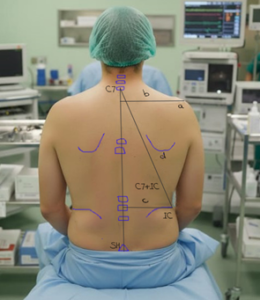
Figure 1: The anatomical measurement landmarks. Demonstrating the landmarks for anthropometric measures a: Acromion process, b: Distance from acromion process to midline, c: Distance from iliac crests to midline d: Wing of scapula. C7: Spinous process of C7 vertebra, IC: Iliac crest, SH: Sacral hiatus, C7-IC: Distance from C7 vertebra prominance to iliac crest(17).
Standard ASA monitoring was applied in the operating room, and intravenous access was secured with an appropriately sized cannula. An infusion of 10 ml/kg of Ringer’s lactate or 0.9% normal saline was initiated. Spinal anesthesia was performed with 3 mL (15 mg) of 0.5% hyperbaric bupivacaine using a 25-gauge Quincke needle at the L3–L4 interspace, with the patient in the lateral decubitus position for five minutes before being turned supine. Vital signs were monitored every five minutes for the first 30 minutes, and surgery commenced once the T10 sensory level was achieved.
Sensory block levels were assessed bilaterally at five-minute intervals for 30 minutes. Temperature sensation was evaluated using an ice cube, and pinprick sensation with a 23-gauge needle. The highest dermatome reached for each modality was recorded as the maximum sensory level. Intraoperative complications were treated according to standard protocols: metoclopramide (0.1–0.2 mg/kg) for nausea or vomiting, ephedrine (0.1 mg/kg) for hypotension, and atropine (0.02 mg/kg) for bradycardia.
Data were analyzed using SPSS version 22. Continuous variables (height, weight, BMI, hip width, shoulder width, vertebral column length, and hip-to-shoulder width ratio) were summarized as mean ± standard deviation for normally distributed data or median (IQR) otherwise. Normality was assessed using the Shapiro–Wilk test. Categorical variables such as gender, ethnicity, and intraoperative complications were expressed as frequencies and percentages. Pearson’s correlation coefficient was used to evaluate associations between anthropometric parameters and sensory block levels, while the chi-square test assessed relationships between categorical variables and block adequacy. A p-value < 0.05 was considered statistically significant.
A total of 111 patients were included in the study. The mean age was 54.6 ± 10.8 years, with 82.9% (n = 92) males and 17.1% (n = 19) females. The overall mean height and weight were 170.2 ± 8.6 cm and 73.4 ± 12.2 kg, respectively, yielding a mean BMI of 25.2 ± 3.5 kg/m². The mean vertebral column length was 61.3 ± 3.7 cm, while the mean hip width, shoulder width, and hip-to-shoulder width ratio were 33.7 ± 2.8 cm, 40.6 ± 2.5 cm, and 0.83 ± 0.05, respectively (Table 1).
The mean maximum sensory block levels for temperature and pinprick were 7.9 ± 1.4 and 8.1 ± 1.6, respectively, corresponding predominantly to dermatomes T6–T10. A significant positive correlation was observed between hip-to-shoulder width ratio and both maximum pinprick sensory level (r = 0.298, p = 0.002) and temperature sensory level (r = 0.312, p = 0.001). No significant correlation was found between vertebral column length and sensory block height (p > 0.05) (Table 2).
The mean sensory block onset time was 4.8 ± 1.2 minutes, with the maximum pinprick sensory block achieved at approximately the T6 dermatome and maximum temperature block at the T5 level. The average duration of sensory block was 112.5 ± 14.7 minutes, with a total of 15.2 ± 2.1 segments blocked. Intraoperative complications were relatively infrequent, with hypotension occurring in 23.4% of patients, nausea in 11.7%, bradycardia in 9.9%, and vomiting in 4.5% (Table 3).
Correlation analysis revealed that the hip/shoulder-width ratio showed a significant positive association with both maximum pinprick block level (r = 0.298, p = 0.002) and maximum temperature block level (r = 0.312, p = 0.001). BMI also demonstrated a significant positive correlation with both pinprick (r = 0.221, p = 0.019) and temperature block levels (r = 0.235, p = 0.013). Hip width was significantly correlated with maximum temperature block (r = 0.190, p = 0.048) but not with pinprick block. Shoulder width and vertebral column length showed no statistically significant correlations with block levels (Table 4).
Post-stratification analysis showed that hip-shoulder-width ratio did not vary significantly across different age or gender groups. However, a significant association was found with BMI, where overweight and obese individuals demonstrated higher ratios compared to those with normal BMI values (p = 0.018). This suggests that body habitus, particularly excess weight, may influence anthropometric predictors of spinal block distribution (Table 5).
Among the 111 patients, gender and ethnicity showed no significant association with block adequacy, with both males and females achieving similar rates of effective sensory block. Regarding intraoperative complications, hypotension (23.4%), bradycardia (9.9%), and vomiting (4.5%) did not significantly influence block outcomes. However, nausea, reported in 11.7% of cases, was significantly associated with inadequate sensory block (p = 0.042). These findings suggest that while most demographic and intraoperative factors did not alter block efficacy, nausea may serve as a clinical marker of suboptimal sensory block (Table 6)
The present study found a significant positive correlation between hip/shoulder-width ratio (HSR) and the maximum sensory level achieved after single-shot intrathecal hyperbaric bupivacaine; BMI also showed a modest but significant positive correlation with both pinprick and temperature block heights, while hip width correlated weakly with temperature block only. Post-stratification showed that HSR did not differ significantly by age or gender but increased with rising BMI. Clinically important intraoperative complications were uncommon overall; however, nausea occurred more often with inadequate block levels. These principal findings align with, and extend, recent reports investigating anthropometric predictors of spinal anesthesia spread.2,18
Several recent prospective and observational studies have reported a positive association between HSR (or related hip/shoulder indices) and cephalad spread of spinal anaesthesia.17, 19, 20 A study evaluated HSR in adults receiving 3 mL of 0.5% hyperbaric bupivacaine and reported a positive correlation between HSR and sensory level (HSR r≈0.30), a result that mirrors our HSR–block correlation in both direction and magnitude. That study also found BMI to be correlated with block height, consistent with the present study results.2
Work focused on parturients and non-obstetric cohorts has emphasized that three-dimensional body-shape metrics like abdominal girth, vertebral-column length, and derived ratios, often explain variability in block height better than simple one-dimensional measures such as height alone. Multiple studies found abdominal circumference and vertebral column length or their combination, e.g., VCL/AC²bto be significant predictors of cephalad spread for a fixed dose of intrathecal local anesthetic, and recommended incorporating these measures into predictive models for block height. Our study did not find vertebral column length to be significantly correlated with block level, a discrepancy that may be explained by differences in patient mix (urological, mostly male, non-pregnant) and the narrower inclusion ranges for height/weight used in our protocol.14, 21
A 2021 retrospective cohort that developed a predictive model for peak sensory level identified dose, height, weight, gender and age as independent predictors and produced a multivariable formula with reasonable predictive power. Although their model emphasized dose and basic demographics, several subsequent prospective studies, including those that measured HSR, abdominal girth and VCL, argued that adding body-shape metrics improves prediction beyond demographic variables alone. Our finding that both HSR and BMI correlated with block height supports a hybrid approach, demographic/dose variables together with simple anthropometrics, for individualized dose estimation.18, 21
The physiological justification for an HSR–block relationship has been discussed in the literature: a relatively wider hip and narrower shoulder (higher HSR) may reflect pelvic/abdominal shape and fat distribution that increase intra-abdominal pressure or alter subarachnoid CSF volume or distribution of hyperbaric solution when patients are turned supine after lateral injection. These mechanistic hypotheses were raised in several observational reports are consistent with our observation that BMI, a proxy for adiposity also correlated positively with block height. Nonetheless, direct measures of CSF volume or intra-abdominal pressure were not performed in our cohort, as is the case in most clinical studies, which limits mechanistic certainty.2, 14
Regarding complications and clinical relevance, multiple recent studies have confirmed that higher sensory levels are associated with increased incidence of hypotension and nausea during spinal anesthesia, particularly in obstetric populations where sympathetic block is pronounced.22-24 In our dataset, intraoperative hypotension and bradycardia were infrequent and not statistically linked to block adequacy, but nausea was significantly associated with inadequate block levels. The association of nausea with inadequate block is biologically plausible like insufficient analgesia/visceral discomfort and complements other reports that emphasize hemodynamic sequelae rather than nausea alone as correlates of high block levels; differences between studies may reflect the type of surgery (urological vs obstetric) and anesthetic dose/regimen,14, 25
The present study findings differ from some prior reports. Possible explanations include differences in study populations, the fixed local-anesthetic dose, and the lateral-to-supine injection practice used, and restricted anthropometric inclusion criteria (height 160–190 cm; weight 50–100 kg) that may reduce variance in some predictors such as vertebral column length. Studies that included parturient or a broader BMI range often observed stronger associations with abdominal girth or VCL, suggesting population-specific effects.20, 21
Strengths of our study include a prespecified surgical case mix, only the listed urological procedures, a standardized anesthetic technique (3 mL of 0.5% hyperbaric bupivacaine via 25G Quincke at L3–4 with 5-minute lateral positioning), and systematic sensory assessment at 5-minute intervals to 30 minutes. Limitations mirror those noted in the literature: single-center design, modest sample size (n = 111) relative to large database analyses, lack of direct measurements of CSF volume or intra-abdominal pressure, and limited generalizability to obese patients outside our weight cap or to obstetric populations. Future multicenter studies with larger, more diverse BMI ranges and incorporation of ultrasound or imaging-based CSF/epidural space metrics would help validate and refine HSR-based prediction rules.
The present study supported a clinically useful role for hip/shoulder-width ratio, together with BMI, as simple, rapid bedside measures that correlate with cephalad spread of spinal anesthesia in adult urological patients. This finding is concordant with several recent observational studies (2020–2024) that advocate combining conventional demographic/dose variables with focused anthropometrics to better predict block height, reduce the risk of insufficient or excessively high blocks, and guide personalized intrathecal dosing strategies. Larger prospective validation and incorporation into a multivariable dosing algorithm are reasonable next steps.
The present study demonstrates that simple anthropometric indices, particularly the hip-shoulder-width ratio and BMI, serve as valuable predictors of sensory block spread in patients undergoing urological procedures under spinal anesthesia. Unlike traditional reliance on height or weight alone, these measures capture body-shape variations that significantly influence intrathecal drug distribution, thereby offering a practical, low-cost tool for tailoring anesthetic dosing at the bedside. By highlighting their predictive potential, our findings not only corroborate recent evidence but also emphasize the importance of integrating individualized body morphology into anesthetic planning to minimize complications and optimize block adequacy. This patient-centered approach holds promise for enhancing both safety and efficacy of spinal anesthesia in routine clinical practice
6. Abbreviations: BMI: Body Mass Index; CSF: Cerebrospinal Fluid; TURP: Transurethral Resection of the Prostate; HSR: hip-to-shoulder width ratio
7. Acknowledgment
None
8. Funding
None
9. Conflict of interest
No conflict of interest has been declared.
10. Ethical approval
SIUT-ERC-2024/A-483, dated April 15, 2024.
11. Authors contribution
Authors affiliations:
- Sindh Institute of Urology and Transplantation (SIUT), Sardar Yaqoob Ali Khan Road, near civil hospital, Karachi, Pakistan; Email: naeem@gmail.com
- Sindh Institute of Urology and Transplantation (SIUT), Sardar Yaqoob Ali Khan Road, near civil hospital, Karachi, Pakistan; Email: mqamarabbas2001@yahoo.com
- Sindh Institute of Urology and Transplantation (SIUT), Sardar Yaqoob Ali Khan Road, near civil hospital, Karachi, Pakistan; Email: ghaniqa@gmail.com
- Sindh Institute of Urology and Transplantation (SIUT), Sardar Yaqoob Ali Khan Road, near civil hospital, Karachi, Pakistan; Email: smabbas69@hotmail.com
- Sindh Institute of Urology and Transplantation (SIUT), Sardar Yaqoob Ali Khan Road, near civil hospital, Karachi, Pakistan; Email: splashinaday@yahoo.com
- Sindh Institute of Urology and Transplantation (SIUT), Sardar Yaqoob Ali Khan Road, near civil hospital, Karachi, Pakistan; Email: drvijayvalecha@outlook.com
ABSTRACT
Background: The sensory level achieved with spinal anesthesia varies among patients and may be influenced by anthropometric factors. Hip-to-shoulder width ratio, as a marker of body habitus, has been hypothesized to affect cephalad spread of intrathecally administered local anesthetics. The objective of the present study was to determine the correlation between hip-to-shoulder width ratio and spinal anesthesia sensory levels in patients undergoing urological surgeries.
Methodology: This descriptive cross-sectional study was conducted at Sindh Institute of Urology and Transplantation over a period of five months from 5th June, 2025 to 10th October, 2025. A total of 111 patients were enrolled through non-probability consecutive sampling. Baseline demographics, anthropometric measurements, and vertebral column length were recorded. Sensory block characteristics and intraoperative complications were assessed. Pearson’s correlation coefficient and chi-square test were applied, with p < 0.05 considered significant.
Results: The mean age of participants was 54.6 ± 10.8 years, with males comprising 82.9%. The mean hip-to-shoulder width ratio was 0.83 ± 0.05. A significant positive correlation was observed between hip-to-shoulder width ratio and both pinprick (r = 0.298, p = 0.002) and temperature sensory block levels (r = 0.312, p = 0.001). BMI also showed a significant association (p = 0.018), while gender and ethnicity did not significantly influence block outcomes. Nausea was the only complication significantly associated with inadequate block (p = 0.042).
Conclusion: Hip-to-shoulder width ratio and BMI are important predictors of spinal anesthesia spread in urological surgeries. Incorporating these parameters into pre-anesthetic assessment may improve block predictability and patient safety.
Keywords: Anthropometry; Body Mass Index; Hip-to-shoulder width ratio; Sensory block; Spinal Anesthesia; Urologic Surgical Procedures
Citation: Naeem N, Abbas MQ, Ghani, Abbas AA, Uddin SW, Kumar V. Evaluation of effect of hip-to-shoulder width ratio on sensory level of spinal anesthesia for urological surgeries: a tertiary care hospital study. Anaesth. pain intensive care 2026;30(6):661-668. DOI: 10.35975/apic.v30i6.3259
Received: May 09, 2025; Revised: October 26, 2025; Accepted: January 01, 2025
1. INTRODUCTION
Spinal anesthesia is a widely recognized and reliable neuraxial technique that finds extensive use in infraumbilical surgeries, particularly urological procedures such as transurethral resection of the prostate, cystolitholapaxy, hydrocelectomy, open prostatectomy, vasectomy, and adult circumcision1, 2. This simple and safe approach involves placing local anesthetic directly into the intrathecal space, thereby providing effective analgesia and muscle relaxation. It remains one of the most frequently employed anesthetic techniques in urology because of its rapid onset, minimal systemic drug exposure, and cost-effectiveness.3, 4
Despite its advantages, a major clinical challenge in spinal anesthesia is determining the optimal intrathecal local anesthetic dosage required to achieve the desired sensory block level for individual patients5-7. Underdosing may lead to inadequate analgesia, while overdosing can result in excessively high block levels with life-threatening complications such as respiratory depression and hypotension. Thus, identifying patient-specific predictors of anesthetic spread is essential to ensure comfort, safety, and procedural success during the perioperative period,8, 9.
Several factors including age, height, weight, gender, pregnancy, anatomical characteristics, cerebrospinal fluid properties, volume, and patient positioning significantly influence the spread of intrathecal anesthesia.10, 11 In addition, anthropometric measurements have emerged as potential predictors of block distribution.12 Hip width, for instance, varies among racial and ethnic groups and serves as an established indicator of body fat distribution.13 Furthermore, other body habitus features, such as abdominal fat distribution, torso-to-height ratio, and vertebral column length (VCL), also affect anesthetic distribution,14,15 These readily obtainable physical measurements can therefore be valuable tools for anticipating spinal block levels in clinical practice, helping anesthesiologists adjust doses more precisely.
Previous research has highlighted the predictive value of anthropometric indices. One study demonstrated a tatistically significant positive correlation between hip-to-shoulder width ratio (HSR) and maximum sensory block level achieved during spinal anesthesia (HSR: r = 0.297, p < 0.05; BMI: r = 0.385, p < 0.05)2. Such findings suggest that HSR could serve as a quick, non-invasive, and clinically useful indicator for estimating anesthetic spread.
Given inter-individual variability in body proportions across populations, locally relevant data are needed to guide anesthesia practice. Anthropometric indices such as the hip-to-shoulder width ratio may therefore provide anesthesiologists with a simple and reliable tool to anticipate spinal block height, reduce complications, and personalize intrathecal dosing. To date, limited studies have explored this relationship within the Pakistani population. By examining the correlation between hip-to-shoulder width ratio and spinal anesthesia level in patients undergoing urological surgeries, this study aims to enhance perioperative safety, improve anesthetic predictability, and contribute locally relevant evidence to anesthesia research in Pakistan.
2. METHODOLOGY
This descriptive cross-sectional study was conducted in the elective urology operating theaters of the Sindh Institute of Urology and Transplantation (SIUT), Karachi, over a four-month and ten-days period from 5th June, 2025 to 10th October, 2025. Ethical approval was obtained from the SIUT Ethical Review Committee (Approval No. SIUT-ERC-2024/A-483, dated April 15, 2024).
The sample size was calculated at 111 participants, based on a previously reported correlation coefficient (r = 0.263) between hip-to-shoulder width ratio and maximum sensory block level, assuming a statistical power of 80% and a 5% level of significance. Patients were recruited using a non-probability consecutive sampling technique.
Eligible participants included adults of either gender, aged 18–75 years, with ASA physical status I or II, height between 160–190 cm, and weight between 50–100 kg. Patients from all ethnic backgrounds who provided written informed consent were included. Exclusion criteria were emergency surgeries, contraindications to spinal anesthesia, allergy to amide local anesthetics, pregnancy, and any physical, mental, or sensory impairment. Patients who developed persistent complications despite initial management were also excluded.
All anthropometric and baseline measurements were obtained in the preoperative holding area by a single trained anesthetist to minimize inter-observer variability. Each patient’s height, weight, and vertebral column length were recorded. Hip width was measured between the highest points of the iliac crests at the level of the pubic tubercle, shoulder width between the two acromion processes, and vertebral column length from the C7 vertebra to the sacral hiatus using a flexible measuring tape (Figure 1). Patients were instructed to fast for eight hours prior to surgery.
Figure 1: The anatomical measurement landmarks. Demonstrating the landmarks for anthropometric measures a: Acromion process, b: Distance from acromion process to midline, c: Distance from iliac crests to midline d: Wing of scapula. C7: Spinous process of C7 vertebra, IC: Iliac crest, SH: Sacral hiatus, C7-IC: Distance from C7 vertebra prominance to iliac crest(17).
Standard ASA monitoring was applied in the operating room, and intravenous access was secured with an appropriately sized cannula. An infusion of 10 ml/kg of Ringer’s lactate or 0.9% normal saline was initiated. Spinal anesthesia was performed with 3 mL (15 mg) of 0.5% hyperbaric bupivacaine using a 25-gauge Quincke needle at the L3–L4 interspace, with the patient in the lateral decubitus position for five minutes before being turned supine. Vital signs were monitored every five minutes for the first 30 minutes, and surgery commenced once the T10 sensory level was achieved.
Sensory block levels were assessed bilaterally at five-minute intervals for 30 minutes. Temperature sensation was evaluated using an ice cube, and pinprick sensation with a 23-gauge needle. The highest dermatome reached for each modality was recorded as the maximum sensory level. Intraoperative complications were treated according to standard protocols: metoclopramide (0.1–0.2 mg/kg) for nausea or vomiting, ephedrine (0.1 mg/kg) for hypotension, and atropine (0.02 mg/kg) for bradycardia.
Data were analyzed using SPSS version 22. Continuous variables (height, weight, BMI, hip width, shoulder width, vertebral column length, and hip-to-shoulder width ratio) were summarized as mean ± standard deviation for normally distributed data or median (IQR) otherwise. Normality was assessed using the Shapiro–Wilk test. Categorical variables such as gender, ethnicity, and intraoperative complications were expressed as frequencies and percentages. Pearson’s correlation coefficient was used to evaluate associations between anthropometric parameters and sensory block levels, while the chi-square test assessed relationships between categorical variables and block adequacy. A p-value < 0.05 was considered statistically significant.
3. RESULTS
A total of 111 patients were included in the study. The mean age was 54.6 ± 10.8 years, with 82.9% (n = 92) males and 17.1% (n = 19) females. The overall mean height and weight were 170.2 ± 8.6 cm and 73.4 ± 12.2 kg, respectively, yielding a mean BMI of 25.2 ± 3.5 kg/m². The mean vertebral column length was 61.3 ± 3.7 cm, while the mean hip width, shoulder width, and hip-to-shoulder width ratio were 33.7 ± 2.8 cm, 40.6 ± 2.5 cm, and 0.83 ± 0.05, respectively (Table 1).
| Table 1: Baseline characteristics of patients (n = 111) | |
| Variable | Mean ± SD |
| Age (years) | 54.6 ± 10.8 |
| Height (cm) | 170.5 ± 6.2 |
| Weight (kg) | 72.3 ± 9.5 |
| BMI (kg/m²) | 24.8 ± 3.1 |
| Vertebral column length (cm) | 61.2 ± 3.7 |
| Hip-width (cm) | 34.5 ± 2.8 |
| Shoulder-width (cm) | 41.7 ± 3.1 |
| Hip/Shoulder-width ratio | 0.83 ± 0.05 |
The mean maximum sensory block levels for temperature and pinprick were 7.9 ± 1.4 and 8.1 ± 1.6, respectively, corresponding predominantly to dermatomes T6–T10. A significant positive correlation was observed between hip-to-shoulder width ratio and both maximum pinprick sensory level (r = 0.298, p = 0.002) and temperature sensory level (r = 0.312, p = 0.001). No significant correlation was found between vertebral column length and sensory block height (p > 0.05) (Table 2).
| Table 2: Patient distribution by gender, ethnicity, and surgical procedures | ||
| Variable | Category | n (%) |
| Gender | Male | 92 (82.9%) |
| Female | 19 (17.1%) | |
| Ethnicity | Sindhi | 40 (36.0%) |
| Pashtun | 27 (24.3%) | |
| Balochi | 21 (18.9%) | |
| Punjabi | 12 (10.8%) | |
| Others | 11 (10%) | |
| Surgical Procedure | TURP | 48 (43.2%) |
| Cystolitholapaxy | 22 (19.8%) | |
| Hydrocelectomy | 16 (14.4%) | |
| Open Prostatectomy | 12 (10.8%) | |
| Vasectomy | 7 (6.3%) | |
| Adult Circumcision | 6 (5.5%) | |
The mean sensory block onset time was 4.8 ± 1.2 minutes, with the maximum pinprick sensory block achieved at approximately the T6 dermatome and maximum temperature block at the T5 level. The average duration of sensory block was 112.5 ± 14.7 minutes, with a total of 15.2 ± 2.1 segments blocked. Intraoperative complications were relatively infrequent, with hypotension occurring in 23.4% of patients, nausea in 11.7%, bradycardia in 9.9%, and vomiting in 4.5% (Table 3).
| Table 3: Sensory block characteristics and intraoperative complications | |
| Variable | Mean ± SD / n (%) |
| Sensory block onset time (minutes) | 4.8 ± 1.2 |
| Maximum pinprick sensory block | T6 ± 1.1 |
| Maximum temperature sensory block (dermatome) | T5 ± 1.3 |
| Sensory block duration (minutes) | 112.5 ± 14.7 |
| Total number of blocked segments | 15.2 ± 2.1 |
| Intraoperative Complications | |
| Hypotension | 26 (23.4%) |
| Nausea | 13 (11.7%) |
| Bradycardia | 11 (9.9%) |
| Vomiting | 5 (4.5%) |
Correlation analysis revealed that the hip/shoulder-width ratio showed a significant positive association with both maximum pinprick block level (r = 0.298, p = 0.002) and maximum temperature block level (r = 0.312, p = 0.001). BMI also demonstrated a significant positive correlation with both pinprick (r = 0.221, p = 0.019) and temperature block levels (r = 0.235, p = 0.013). Hip width was significantly correlated with maximum temperature block (r = 0.190, p = 0.048) but not with pinprick block. Shoulder width and vertebral column length showed no statistically significant correlations with block levels (Table 4).
| Table 4: Correlation between anthropometric parameters and sensory block | ||
| Parameter | Maximum Pinprick Block
Level (r, p-value) |
Maximum Temperature Block Level (r, p-value) |
| Hip-width (cm) | r = 0.182, p = 0.055 | r = 0.190, p = 0.048* |
| Shoulder-width (cm) | r = –0.112, p = 0.241 | r = –0.108, p = 0.259 |
| Hip/Shoulder-width ratio | r = 0.298, p = 0.002* | r = 0.312, p = 0.001* |
| BMI (kg/m²) | r = 0.221, p = 0.019* | r = 0.235, p = 0.013* |
| Vertebral column length (cm) | r = –0.158, p = 0.089 | r = –0.164, p = 0.078 |
| *Significant at p < 0.05 | ||
Post-stratification analysis showed that hip-shoulder-width ratio did not vary significantly across different age or gender groups. However, a significant association was found with BMI, where overweight and obese individuals demonstrated higher ratios compared to those with normal BMI values (p = 0.018). This suggests that body habitus, particularly excess weight, may influence anthropometric predictors of spinal block distribution (Table 5).
| Table 5: Post-stratification analysis of effect modifiers on hip-shoulder-width ratio | ||||
| Effect Modifier | Categories | n | Mean Hip-Shoulder-Width Ratio ± SD | p-value |
| Age | ≤30 years | 29 | 0.79 ± 0.05 | 0.184 |
| >30 years | 82 | 0.81 ± 0.06 | ||
| Gender | Male | 92 | 0.80 ± 0.05 | 0.337 |
| Female | 19 | 0.81 ± 0.06 | ||
| BMI | Normal (18.5–24.9) | 57 | 0.78 ± 0.04 | 0.018* |
| Overweight (25–29.9) | 39 | 0.82 ± 0.05 | ||
| Obese (≥30) | 15 | 0.84 ± 0.06 | ||
| *Significant at p < 0.05 | ||||
Among the 111 patients, gender and ethnicity showed no significant association with block adequacy, with both males and females achieving similar rates of effective sensory block. Regarding intraoperative complications, hypotension (23.4%), bradycardia (9.9%), and vomiting (4.5%) did not significantly influence block outcomes. However, nausea, reported in 11.7% of cases, was significantly associated with inadequate sensory block (p = 0.042). These findings suggest that while most demographic and intraoperative factors did not alter block efficacy, nausea may serve as a clinical marker of suboptimal sensory block (Table 6)
| Table 6. Demographic and clinical variables with block adequacy | ||||
| Variable | Category | Adequate Block | Inadequate
Block |
χ² (p-value) |
| Gender | Male (n = 92) | 81 (88.0) | 11 (12.0 = ) | 0.45 (0.503) |
| Female (n = 19) | 15 (78.9) | 4 (21.1) | ||
| Ethnicity | Sindhi (n = 40) | 34 (85.0) | 6 (15.0) | 1.12 (0.291) |
| Pashtun (n = 27) | 24 (88.9) | 3 (11.1) | ||
| Baloch (n = 21) | 18 (85.7) | 3 (14.3) | ||
| Punjabi (n = 12) | 10 (83.3) | 2 (16.7) | ||
| Other (n = 11) | 9 (81.8) | 2 (18.2) | ||
| Hypotension | Present (n = 26) | 22 (84.6) | 4 (15.4) | 0.95 (0.331) |
| Absent (n = 85) | 74 (87.1) | 11 (12.9) | ||
| Bradycardia | Present (n = 11) | 9 (81.8) | 2 (18.2) | 0.48 (0.490) |
| Absent (n = 100) | 87 (87.0) | 13 (13.0) | ||
| Nausea | Present (n = 13) | 9 (69.2) | 4 (30.8) | 4.12 (0.042*) |
| Absent (n = 98) | 87 (88.8) | 11 (11.2) | ||
| Vomiting | Present (n = 5) | 4 (80.0) | 1 (20.0) | 0.26 (0.609) |
| Absent (n = 106) | 92 (86.8) | 14 (13.2) | ||
| * Significant at p < 0.05; Data presented as n (%) | ||||
4. DISCUSSION
The present study found a significant positive correlation between hip/shoulder-width ratio (HSR) and the maximum sensory level achieved after single-shot intrathecal hyperbaric bupivacaine; BMI also showed a modest but significant positive correlation with both pinprick and temperature block heights, while hip width correlated weakly with temperature block only. Post-stratification showed that HSR did not differ significantly by age or gender but increased with rising BMI. Clinically important intraoperative complications were uncommon overall; however, nausea occurred more often with inadequate block levels. These principal findings align with, and extend, recent reports investigating anthropometric predictors of spinal anesthesia spread.2,18
Several recent prospective and observational studies have reported a positive association between HSR (or related hip/shoulder indices) and cephalad spread of spinal anaesthesia.17, 19, 20 A study evaluated HSR in adults receiving 3 mL of 0.5% hyperbaric bupivacaine and reported a positive correlation between HSR and sensory level (HSR r≈0.30), a result that mirrors our HSR–block correlation in both direction and magnitude. That study also found BMI to be correlated with block height, consistent with the present study results.2
Work focused on parturients and non-obstetric cohorts has emphasized that three-dimensional body-shape metrics like abdominal girth, vertebral-column length, and derived ratios, often explain variability in block height better than simple one-dimensional measures such as height alone. Multiple studies found abdominal circumference and vertebral column length or their combination, e.g., VCL/AC²bto be significant predictors of cephalad spread for a fixed dose of intrathecal local anesthetic, and recommended incorporating these measures into predictive models for block height. Our study did not find vertebral column length to be significantly correlated with block level, a discrepancy that may be explained by differences in patient mix (urological, mostly male, non-pregnant) and the narrower inclusion ranges for height/weight used in our protocol.14, 21
A 2021 retrospective cohort that developed a predictive model for peak sensory level identified dose, height, weight, gender and age as independent predictors and produced a multivariable formula with reasonable predictive power. Although their model emphasized dose and basic demographics, several subsequent prospective studies, including those that measured HSR, abdominal girth and VCL, argued that adding body-shape metrics improves prediction beyond demographic variables alone. Our finding that both HSR and BMI correlated with block height supports a hybrid approach, demographic/dose variables together with simple anthropometrics, for individualized dose estimation.18, 21
The physiological justification for an HSR–block relationship has been discussed in the literature: a relatively wider hip and narrower shoulder (higher HSR) may reflect pelvic/abdominal shape and fat distribution that increase intra-abdominal pressure or alter subarachnoid CSF volume or distribution of hyperbaric solution when patients are turned supine after lateral injection. These mechanistic hypotheses were raised in several observational reports are consistent with our observation that BMI, a proxy for adiposity also correlated positively with block height. Nonetheless, direct measures of CSF volume or intra-abdominal pressure were not performed in our cohort, as is the case in most clinical studies, which limits mechanistic certainty.2, 14
Regarding complications and clinical relevance, multiple recent studies have confirmed that higher sensory levels are associated with increased incidence of hypotension and nausea during spinal anesthesia, particularly in obstetric populations where sympathetic block is pronounced.22-24 In our dataset, intraoperative hypotension and bradycardia were infrequent and not statistically linked to block adequacy, but nausea was significantly associated with inadequate block levels. The association of nausea with inadequate block is biologically plausible like insufficient analgesia/visceral discomfort and complements other reports that emphasize hemodynamic sequelae rather than nausea alone as correlates of high block levels; differences between studies may reflect the type of surgery (urological vs obstetric) and anesthetic dose/regimen,14, 25
The present study findings differ from some prior reports. Possible explanations include differences in study populations, the fixed local-anesthetic dose, and the lateral-to-supine injection practice used, and restricted anthropometric inclusion criteria (height 160–190 cm; weight 50–100 kg) that may reduce variance in some predictors such as vertebral column length. Studies that included parturient or a broader BMI range often observed stronger associations with abdominal girth or VCL, suggesting population-specific effects.20, 21
Strengths of our study include a prespecified surgical case mix, only the listed urological procedures, a standardized anesthetic technique (3 mL of 0.5% hyperbaric bupivacaine via 25G Quincke at L3–4 with 5-minute lateral positioning), and systematic sensory assessment at 5-minute intervals to 30 minutes. Limitations mirror those noted in the literature: single-center design, modest sample size (n = 111) relative to large database analyses, lack of direct measurements of CSF volume or intra-abdominal pressure, and limited generalizability to obese patients outside our weight cap or to obstetric populations. Future multicenter studies with larger, more diverse BMI ranges and incorporation of ultrasound or imaging-based CSF/epidural space metrics would help validate and refine HSR-based prediction rules.
The present study supported a clinically useful role for hip/shoulder-width ratio, together with BMI, as simple, rapid bedside measures that correlate with cephalad spread of spinal anesthesia in adult urological patients. This finding is concordant with several recent observational studies (2020–2024) that advocate combining conventional demographic/dose variables with focused anthropometrics to better predict block height, reduce the risk of insufficient or excessively high blocks, and guide personalized intrathecal dosing strategies. Larger prospective validation and incorporation into a multivariable dosing algorithm are reasonable next steps.
5. CONCLUSION
The present study demonstrates that simple anthropometric indices, particularly the hip-shoulder-width ratio and BMI, serve as valuable predictors of sensory block spread in patients undergoing urological procedures under spinal anesthesia. Unlike traditional reliance on height or weight alone, these measures capture body-shape variations that significantly influence intrathecal drug distribution, thereby offering a practical, low-cost tool for tailoring anesthetic dosing at the bedside. By highlighting their predictive potential, our findings not only corroborate recent evidence but also emphasize the importance of integrating individualized body morphology into anesthetic planning to minimize complications and optimize block adequacy. This patient-centered approach holds promise for enhancing both safety and efficacy of spinal anesthesia in routine clinical practice
6. Abbreviations: BMI: Body Mass Index; CSF: Cerebrospinal Fluid; TURP: Transurethral Resection of the Prostate; HSR: hip-to-shoulder width ratio
7. Acknowledgment
None
8. Funding
None
9. Conflict of interest
No conflict of interest has been declared.
10. Ethical approval
SIUT-ERC-2024/A-483, dated April 15, 2024.
11. Authors contribution
- NN: Concept design, Study design, Data collection and analysis, Discussion, Manuscript drafting, and final preparation.
- MQA: Study supervision, Result validation and Proof reading.
- AAG: Data Collection, Manuscript review and Statistics.
- SMA: Data Collection and literature review.
- SWU and VK: Manuscript editing and formatting.
12. REFERENCES
- Panchendrabose K, Bal DS, Sidhom K, Chung D, Pierce A, Lokeshwar S, Patel P. A systematic review of loco-sedative anesthesia for urologic surgery. Urology. 2024;189:1–8.PMID: 38777190 DOI: 1016/j.urology.2024.05.017
- Shivashankar A, Rajappa GC, Sudarshan S, Madhu M, Rao R. Evaluation of effect of hip/shoulder-width ratio on the sensory level of spinal anesthesia – a prospective observational study. Anesth Essays Res. 2022;16(1):80–83.PMCID: PMC9558681 DOI: 4103/aer.aer_146_21
- Garg B, Ahuja K, Sharan AD. Regional anesthesia for spine surgery. J Am Acad Orthop Surg. 2022;30(17):809–819.PMID: 35617645 DOI: 5435/JAAOS-D-22-00101
- Doelakeh ES, Chandak A. Risk factors in administering spinal anesthesia: a comprehensive review. Cureus. 2023;15(12):e50208.PMCID: PMC10762496 DOI: 7759/cureus.49886
- Nestor C, Ng C, Sepulveda P, Irwin M. Pharmacological and clinical implications of local anaesthetic mixtures: a narrative review. Anaesthesia. 2022;77(3):339–350.PMID: 34904711 DOI: 1111/anae.15641
- Zheng T, Zheng CY, Yan LP, Guo HL, You Y, Ye P, et al. Comparing the minimum local anesthetic dose of ropivacaine in real-time ultrasound-guided spinal anesthesia and traditional landmark-guided spinal anesthesia: a randomized controlled trial of knee surgery patients. Ann Transl Med. 2021;9(19):1492.PMCID: PMC8573435 DOI: 21037/atm-21-3888
- Imbelloni L, Gouveia M, Ghorayeb N, Neto S. Spinal anesthesia: much more than single shot of hyperbaric bupivacaine. Int J Anesth Anesthesiol. 2021;8(1):122.DOI: 23937/2377-4630/1410122
- Korets J, Li F. Complications in anesthesia. In: Argalious M, Farag E, Sharma D, editors. Basic Sciences in Anesthesia. Cham: Springer; 2025. p. 519–542.DOI: 1007/978-3-031-60203-0_28
- Hofmeister EH. Anesthetic emergencies, resuscitation, and adverse events. In: Veterinary Anesthesia and Analgesia: The Sixth Edition of Lumb and Jones. 2024. p. 54–73.DOI: 1002/9781119830306.ch5
- She YJ, Liu WX, Wang LY, Ou XX, Liang HH, Lei DX. The impact of height on the spread of spinal anesthesia and stress response in parturients undergoing caesarean section: a prospective observational study. BMC Anesthesiol. 2021;21(1):298.PMCID: PMC8630888 DOI: 1186/s12871-021-01523-2
- Liu H, Zhou HM, Wu XW, Zhou QH. Correlation between individual physical characteristics and spinal cerebrospinal fluid volume. Clin Anat. 2023;36(3):420–425.PMID: 36271780 DOI: 1002/ca.23970
- Ekinci NA, Tutar MS, Kozanhan B. Effects of body roundness index on spinal anesthesia block characteristics. Dünya Sağlık Tabiat Bilim Derg. 2022;5(2):67–75.DOI: 56728/dustad.1173736
- Günkaya M, Arar C, Mordeniz C, Baran O, Topçu B. Effect of waist circumference and body mass index on the level of spinal anesthesia. Ain-Shams J Anesthesiol. 2022;14(9).DOI: 1186/s42077-022-00215-4
- Nigam C, Tyagi A, Bhatt S, Kumar M. Vertebral column length and abdominal girth as predictors for cephalad spread of intrathecal hyperbaric bupivacaine: a prospective observational study. Saudi J Anaesth. 2022;16(2):166–171.PMCID: PMC9009572 DOI: 4103/sja.sja_726_21
- Breton JM, Ludwig CG, Yang MJ, Nail TJ, Riesenburger RI, Liu P, et al. Spinal anesthesia in contemporary and complex lumbar spine surgery: experience with 343 cases. J Neurosurg Spine. 2021;36(4):534–541.PMID: 34740182 DOI: 3171/2021.7.SPINE21847
- Eden N, Rajan S. ASA monitoring standards. In: Advanced Anesthesia Review. 2023. p. 19. DOI: 1093/med/9780197584521.003.0008
- Cantürk M, Cantürk FK, Dağlı R, Dağlı SS. The spread of spinal anesthesia in term parturient: effect of hip/shoulder width ratio and vertebral column length. Int J Clin Exp Med. 2016;9(11):21562–21567.[Free Text]
- Huang YY, Chang KY. Sensory block level prediction of spinal anaesthesia with 0.5% hyperbaric bupivacaine: a retrospective study. Sci Rep. 2021;11(1):9105.PMCID: PMC8079681 DOI: 1038/s41598-021-88726-2
- Vasantharajan V, Singh NR, Singh TH, Singh LS, Ngangom B, Xavier A. Effect of hip/shoulder width ratio on the spread of spinal anaesthesia in term parturients: a cross-sectional study. J Clin Diagn Res. 2023;17(3):UC14–UC17.DOI: 7860/JCDR/2023/60093.17586
- Pooja N, Abhishek M, Chandana N. The effect of hip shoulder width ratio and vertebral column length on the spread of spinal anaesthesia in term parturient in elective caesarean section: a prospective study. Res J Med Sci. 2024;18:224–228.[Free Text]
- Bhiwal AK, Bhatt HA, Jeengar L, Sharma K, Baghel AS, Gupta S. Effect of abdominal girth, vertebral column length, and hip/shoulder width ratio on the spread of spinal anesthesia in term parturients undergoing elective cesarean section: a prospective observational non-randomized study. J Obstet Anaesth Crit Care. 2022;12(2):133–139.DOI: 4103/JOACC.JOACC_68_21
- Tuğcugil E, Beşir A. A comparison of the injection rate of local anesthetic during spinal anesthesia on the onset of sensory block and incidence of hypotension in caesarean section. Clin Exp Obstet Gynecol. 2022;49(7):152.DOI: 31083/j.ceog4907152
- Yu C, Gu J, Liao Z, Feng S. Prediction of spinal anesthesia-induced hypotension during elective cesarean section: a systematic review of prospective observational studies. Int J Obstet Anesth. 2021;47:103175.PMID: 34034957 DOI: 1016/j.ijoa.2021.103175
- Manouchehrian N, Moradi A, Torkashvand L. Comparative study of effect of spinal anesthesia in sitting and lateral positions on the onset time of sensory block and hemodynamic condition in cesarean section: a randomized clinical trial. Anesth Pain Med. 2021;11(1):e111483.PMCID: PMC8241818 DOI: 5812/aapm.111483
- Algarni RA, Albakri HY, Albakri LA, Alsharif RM, Alrajhi RK, Makki RM, et al. Incidence and risk factors of spinal anesthesia-related complications after an elective cesarean section: a retrospective cohort study. Cureus. 2023;15(1):e33675.PMCID: PMC9954762 DOI: 7759/cureus.34198